 Add to Chrome
 Add to Firefox
 Add to Edge
A Gait Foundation Model Predicts Multi-System Health Phenotypes from 3D Skeletal Motion
Mar 26, 2026
Gait is increasingly recognized as a vital sign, yet current approaches treat it as a symptom of specific pathologies rather than a systemic biomarker. We developed a gait foundation model for 3D skeletal motion from 3,414 deeply phenotyped adults, recorded via a depth camera during five motor tasks. Learned embeddings outperformed engineered features, predicting age (Pearson r = 0.69), BMI (r = 0.90), and visceral adipose tissue area (r = 0.82). Embeddings significantly predicted 1,980 of 3,210 phenotypic targets; after adjustment for age, BMI, VAT, and height, gait provided independent gains in all 18 body systems in males and 17 of 18 in females, and improved prediction of clinical diagnoses and medication use. Anatomical ablation revealed that legs dominated metabolic and frailty predictions while torso encoded sleep and lifestyle phenotypes. These findings establish gait as an independent multi-system biosignal, motivating translation to consumer-grade video and its integration as a scalable, passive vital sign.

VoxKnesset: A Large-Scale Longitudinal Hebrew Speech Dataset for Aging Speaker Modeling
Mar 05, 2026Speech processing systems face a fundamental challenge: the human voice changes with age, yet few datasets support rigorous longitudinal evaluation. We introduce VoxKnesset, an open-access dataset of ~2,300 hours of Hebrew parliamentary speech spanning 2009-2025, comprising 393 speakers with recording spans of up to 15 years. Each segment includes aligned transcripts and verified demographic metadata from official parliamentary records. We benchmark modern speech embeddings (WavLM-Large, ECAPA-TDNN, Wav2Vec2-XLSR-1B) on age prediction and speaker verification under longitudinal conditions. Speaker verification EER rises from 2.15\% to 4.58\% over 15 years for the strongest model, and cross-sectionally trained age regressors fail to capture within-speaker aging, while longitudinally trained models recover a meaningful temporal signal. We publicly release the dataset and pipeline to support aging-robust speech systems and Hebrew speech processing.
DoAtlas-1: A Causal Compilation Paradigm for Clinical AI
Feb 22, 2026Medical foundation models generate narrative explanations but cannot quantify intervention effects, detect evidence conflicts, or validate literature claims, limiting clinical auditability. We propose causal compilation, a paradigm that transforms medical evidence from narrative text into executable code. The paradigm standardizes heterogeneous research evidence into structured estimand objects, each explicitly specifying intervention contrast, effect scale, time horizon, and target population, supporting six executable causal queries: do-calculus, counterfactual reasoning, temporal trajectories, heterogeneous effects, mechanistic decomposition, and joint interventions. We instantiate this paradigm in DoAtlas-1, compiling 1,445 effect kernels from 754 studies through effect standardization, conflict-aware graph construction, and real-world validation (Human Phenotype Project, 10,000 participants). The system achieves 98.5% canonicalization accuracy and 80.5% query executability. This paradigm shifts medical AI from text generation to executable, auditable, and verifiable causal reasoning.
MedMO: Grounding and Understanding Multimodal Large Language Model for Medical Images
Feb 06, 2026Multimodal large language models (MLLMs) have rapidly advanced, yet their adoption in medicine remains limited by gaps in domain coverage, modality alignment, and grounded reasoning. In this work, we introduce MedMO, a medical foundation model built upon a generalized MLLM architecture and trained exclusively on large-scale, domain-specific data. MedMO follows a multi-stage training recipe: (i) cross-modal pretraining to align heterogeneous visual encoders with a medical language backbone; (ii) instruction tuning on multi-task supervision that spans captioning, VQA, report generation, retrieval, and grounded disease localization with bounding boxes; and (iii) reinforcement learning with verifiable rewards that combine factuality checks with a box-level GIoU reward to strengthen spatial grounding and step-by-step reasoning in complex clinical scenarios. MedMO consistently outperforms strong open-source medical MLLMs across multiple modalities and tasks. On VQA benchmarks, MedMO achieves an average accuracy improvement of +13.7% over the baseline and performs within 1.9% of the SOTA Fleming-VL. For text-based QA, it attains +6.9% over the baseline and +14.5% over Fleming-VL. In medical report generation, MedMO delivers significant gains in both semantic and clinical accuracy. Moreover, it exhibits strong grounding capability, achieving an IoU improvement of +40.4 over the baseline and +37.0% over Fleming-VL, underscoring its robust spatial reasoning and localization performance. Evaluations across radiology, ophthalmology, and pathology-microscopy confirm MedMO's broad cross-modality generalization. We release two versions of MedMO: 4B and 8B. Project is available at https://genmilab.github.io/MedMO-Page
Seg-MoE: Multi-Resolution Segment-wise Mixture-of-Experts for Time Series Forecasting Transformers
Jan 29, 2026Transformer-based models have recently made significant advances in accurate time-series forecasting, but even these architectures struggle to scale efficiently while capturing long-term temporal dynamics. Mixture-of-Experts (MoE) layers are a proven solution to scaling problems in natural language processing. However, existing MoE approaches for time-series forecasting rely on token-wise routing mechanisms, which may fail to exploit the natural locality and continuity of temporal data. In this work, we introduce Seg-MoE, a sparse MoE design that routes and processes contiguous time-step segments rather than making independent expert decisions. Token segments allow each expert to model intra-segment interactions directly, naturally aligning with inherent temporal patterns. We integrate Seg-MoE layers into a time-series Transformer and evaluate it on multiple multivariate long-term forecasting benchmarks. Seg-MoE consistently achieves state-of-the-art forecasting accuracy across almost all prediction horizons, outperforming both dense Transformers and prior token-wise MoE models. Comprehensive ablation studies confirm that segment-level routing is the key factor driving these gains. Our results show that aligning the MoE routing granularity with the inherent structure of time series provides a powerful, yet previously underexplored, inductive bias, opening new avenues for conditionally sparse architectures in sequential data modeling.
MoHETS: Long-term Time Series Forecasting with Mixture-of-Heterogeneous-Experts
Jan 29, 2026Real-world multivariate time series can exhibit intricate multi-scale structures, including global trends, local periodicities, and non-stationary regimes, which makes long-horizon forecasting challenging. Although sparse Mixture-of-Experts (MoE) approaches improve scalability and specialization, they typically rely on homogeneous MLP experts that poorly capture the diverse temporal dynamics of time series data. We address these limitations with MoHETS, an encoder-only Transformer that integrates sparse Mixture-of-Heterogeneous-Experts (MoHE) layers. MoHE routes temporal patches to a small subset of expert networks, combining a shared depthwise-convolution expert for sequence-level continuity with routed Fourier-based experts for patch-level periodic structures. MoHETS further improves robustness to non-stationary dynamics by incorporating exogenous information via cross-attention over covariate patch embeddings. Finally, we replace parameter-heavy linear projection heads with a lightweight convolutional patch decoder, improving parameter efficiency, reducing training instability, and allowing a single model to generalize across arbitrary forecast horizons. We validate across seven multivariate benchmarks and multiple horizons, with MoHETS consistently achieving state-of-the-art performance, reducing the average MSE by $12\%$ compared to strong recent baselines, demonstrating effective heterogeneous specialization for long-term forecasting.
Phenome-Wide Multi-Omics Integration Uncovers Distinct Archetypes of Human Aging
Oct 14, 2025Aging is a highly complex and heterogeneous process that progresses at different rates across individuals, making biological age (BA) a more accurate indicator of physiological decline than chronological age. While previous studies have built aging clocks using single-omics data, they often fail to capture the full molecular complexity of human aging. In this work, we leveraged the Human Phenotype Project, a large-scale cohort of 12,000 adults aged 30--70 years, with extensive longitudinal profiling that includes clinical, behavioral, environmental, and multi-omics datasets -- spanning transcriptomics, lipidomics, metabolomics, and the microbiome. By employing advanced machine learning frameworks capable of modeling nonlinear biological dynamics, we developed and rigorously validated a multi-omics aging clock that robustly predicts diverse health outcomes and future disease risk. Unsupervised clustering of the integrated molecular profiles from multi-omics uncovered distinct biological subtypes of aging, revealing striking heterogeneity in aging trajectories and pinpointing pathway-specific alterations associated with different aging patterns. These findings demonstrate the power of multi-omics integration to decode the molecular landscape of aging and lay the groundwork for personalized healthspan monitoring and precision strategies to prevent age-related diseases.
HPP-Voice: A Large-Scale Evaluation of Speech Embeddings for Multi-Phenotypic Classification
May 22, 2025Human speech contains paralinguistic cues that reflect a speaker's physiological and neurological state, potentially enabling non-invasive detection of various medical phenotypes. We introduce the Human Phenotype Project Voice corpus (HPP-Voice): a dataset of 7,188 recordings in which Hebrew-speaking adults count for 30 seconds, with each speaker linked to up to 15 potentially voice-related phenotypes spanning respiratory, sleep, mental health, metabolic, immune, and neurological conditions. We present a systematic comparison of 14 modern speech embedding models, where modern speech embeddings from these 30-second counting tasks outperform MFCCs and demographics for downstream health condition classifications. We found that embedding learned from a speaker identification model can predict objectively measured moderate to severe sleep apnea in males with an AUC of 0.64 $\pm$ 0.03, while MFCC and demographic features led to AUCs of 0.56 $\pm$ 0.02 and 0.57 $\pm$ 0.02, respectively. Additionally, our results reveal gender-specific patterns in model effectiveness across different medical domains. For males, speaker identification and diarization models consistently outperformed speech foundation models for respiratory conditions (e.g., asthma: 0.61 $\pm$ 0.03 vs. 0.56 $\pm$ 0.02) and sleep-related conditions (insomnia: 0.65 $\pm$ 0.04 vs. 0.59 $\pm$ 0.05). For females, speaker diarization models performed best for smoking status (0.61 $\pm$ 0.02 vs 0.55 $\pm$ 0.02), while Hebrew-specific models performed best (0.59 $\pm$ 0.02 vs. 0.58 $\pm$ 0.02) in classifying anxiety compared to speech foundation models. Our findings provide evidence that a simple counting task can support large-scale, multi-phenotypic voice screening and highlight which embedding families generalize best to specific conditions, insights that can guide future vocal biomarker research and clinical deployment.
Improving Diseases Predictions Utilizing External Bio-Banks
Mar 30, 2025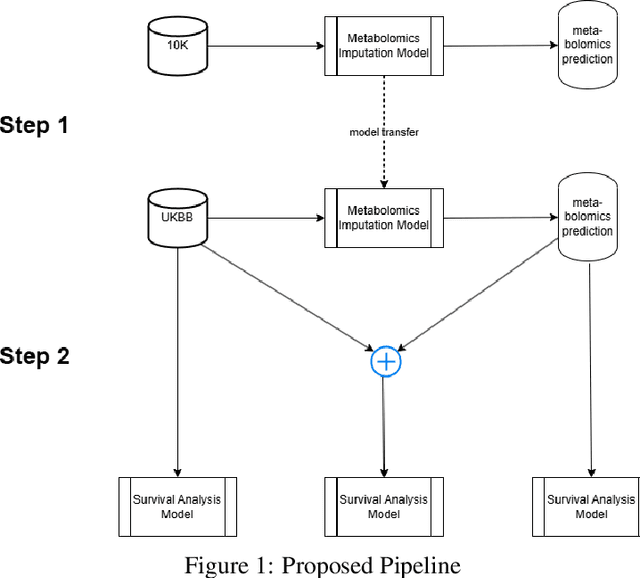
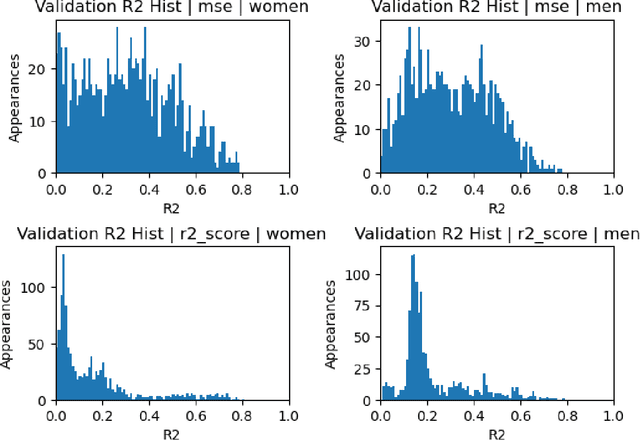
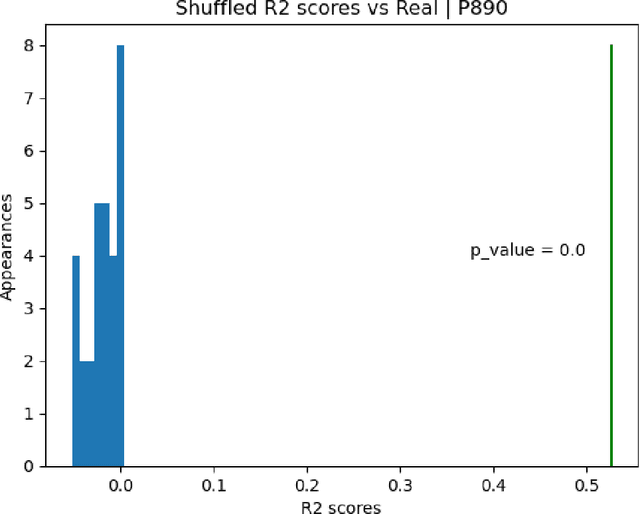
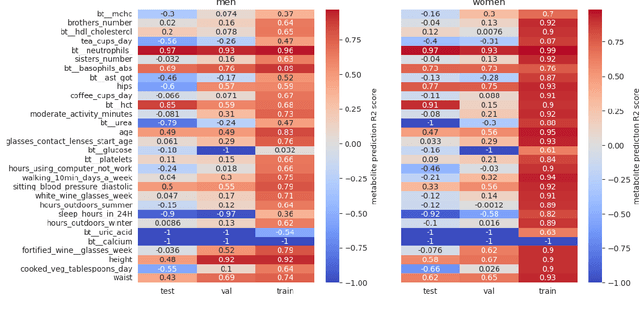
Machine learning has been successfully used in critical domains, such as medicine. However, extracting meaningful insights from biomedical data is often constrained by the lack of their available disease labels. In this research, we demonstrate how machine learning can be leveraged to enhance explainability and uncover biologically meaningful associations, even when predictive improvements in disease modeling are limited. We train LightGBM models from scratch on our dataset (10K) to impute metabolomics features and apply them to the UK Biobank (UKBB) for downstream analysis. The imputed metabolomics features are then used in survival analysis to assess their impact on disease-related risk factors. As a result, our approach successfully identified biologically relevant connections that were not previously known to the predictive models. Additionally, we applied a genome-wide association study (GWAS) on key metabolomics features, revealing a link between vascular dementia and smoking. Although being a well-established epidemiological relationship, this link was not embedded in the model's training data, which validated the method's ability to extract meaningful signals. Furthermore, by integrating survival models as inputs in the 10K data, we uncovered associations between metabolic substances and obesity, demonstrating the ability to infer disease risk for future patients without requiring direct outcome labels. These findings highlight the potential of leveraging external bio-banks to extract valuable biomedical insights, even in data-limited scenarios. Our results demonstrate that machine learning models trained on smaller datasets can still be used to uncover real biological associations when carefully integrated with survival analysis and genetic studies.
SGAC: A Graph Neural Network Framework for Imbalanced and Structure-Aware AMP Classification
Dec 20, 2024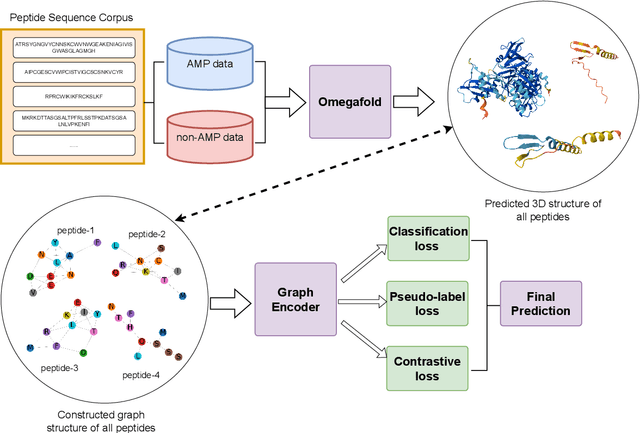
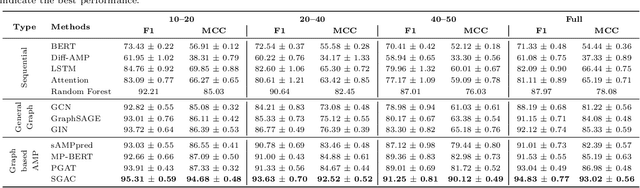
Classifying antimicrobial peptides(AMPs) from the vast array of peptides mined from metagenomic sequencing data is a significant approach to addressing the issue of antibiotic resistance. However, current AMP classification methods, primarily relying on sequence-based data, neglect the spatial structure of peptides, thereby limiting the accurate classification of AMPs. Additionally, the number of known AMPs is significantly lower than that of non-AMPs, leading to imbalanced datasets that reduce predictive accuracy for AMPs. To alleviate these two limitations, we first employ Omegafold to predict the three-dimensional spatial structures of AMPs and non-AMPs, constructing peptide graphs based on the amino acids' C$_\alpha$ positions. Building upon this, we propose a novel classification model named Spatial GNN-based AMP Classifier (SGAC). Our SGAC model employs a graph encoder based on Graph Neural Networks (GNNs) to process peptide graphs, generating high-dimensional representations that capture essential features from the three-dimensional spatial structure of amino acids. Then, to address the inherent imbalanced datasets, SGAC first incorporates Weight-enhanced Contrastive Learning, which clusters similar peptides while ensuring separation between dissimilar ones, using weighted contributions to emphasize AMP-specific features. Furthermore, SGAC employs Weight-enhanced Pseudo-label Distillation to dynamically generate high-confidence pseudo labels for ambiguous peptides, further refining predictions and promoting balanced learning between AMPs and non-AMPs. Experiments on publicly available AMP and non-AMP datasets demonstrate that SGAC significantly outperforms traditional sequence-based methods and achieves state-of-the-art performance among graph-based models, validating its effectiveness in AMP classification.